
Overcome Cu-Al Busbar Challenges: Ultrasonic Welding vs Traditional Methods
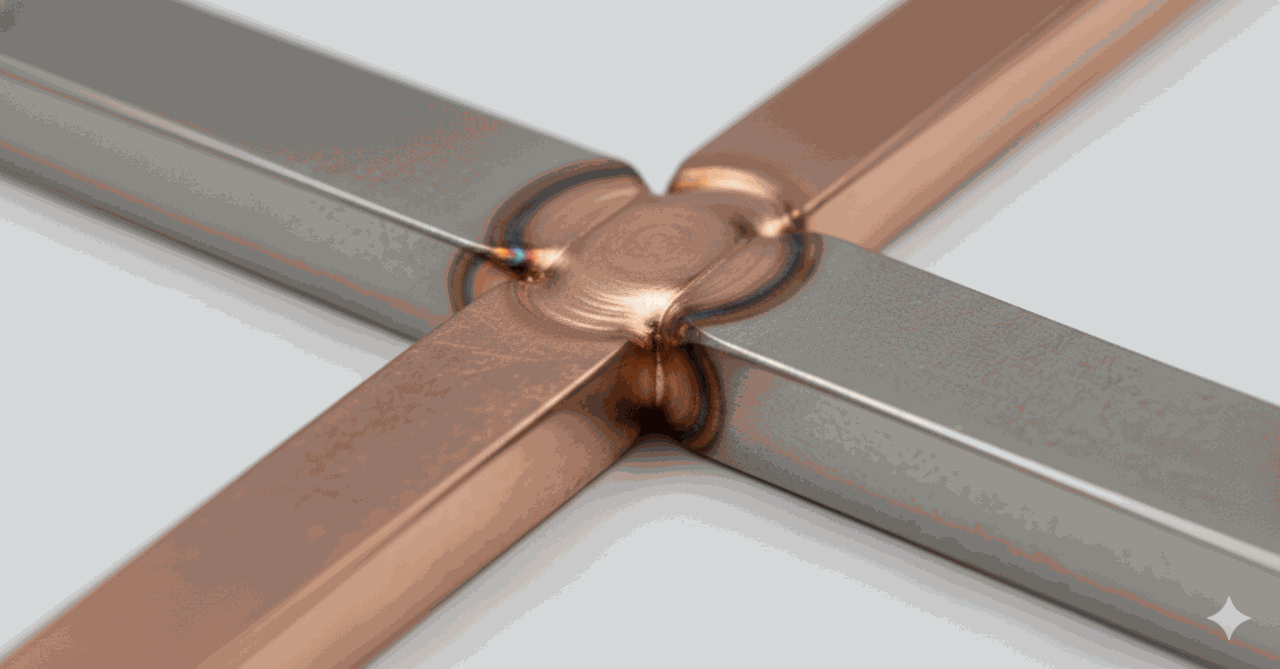
Copper-aluminum welding has long been a bottleneck in busbar manufacturing. Our solid-state ultrasonic welding technology can join copper and aluminum without melting, avoiding the formation of brittle intermetallic compounds and oxide inclusions — the fatal weaknesses of traditional fusion welding.
The Science of Solid-State Joining
Traditional fusion joining methods (laser, resistance, soldering) rely on high-intensity thermal energy to melt materials. When applied to Copper (Cu) and Aluminum (Al), this melting triggers the formation of Intermetallic Compounds (IMCs) — hard, brittle layers that reduce mechanical life and electrical reliability.
Our ultrasonic process creates a metallurgical bond without melting. High-frequency friction disrupts surface oxides and initiates lattice diffusion at the atomic level, eliminating IMC growth and achieving pure metal-to-metal contact with minimal thermal impact.
Why Traditional Processes Often Fail
Bimetallic busbars reduce weight and cost, but they introduce fatal engineering hurdles when heat is applied via conventional methods:
- Intermetallic Fragility: The delta in melting points leads to uncontrollable eutectic reactions, making joints prone to cracking under vehicle vibrations and thermal cycling.
- Insulating Oxides: Aluminum’s oxide layer is a persistent insulator. Fusion methods trap these oxides, leading to dangerous thermal runaway risks and high contact resistance.
- Thermal Mismatch: Copper’s high conductivity draws energy away, causing the aluminum side to warp or suffer burn-through during welding, resulting in inconsistent joint quality.
Critical Application Scenarios
- EV Battery Packs: Welding multi-layer copper foils to thick aluminum busbars — ideal for pouch and prismatic cell interconnections.
- Power Electronics: Connecting copper terminals to aluminum heat sinks without thermal damage to sensitive IGBTs or MOSFETs.
- HV Wire Harnesses: Securely compacting and welding stranded copper wires to aluminum terminals for reliable high-voltage connections.
Ultrasonic Welding Performance Benchmarks
- < 0.1 mΩ Contact Resistance: Equivalent to base metal conductivity, minimizing heat generation and power loss.
- 100% Base Metal Tear: In destructive testing, the aluminum base metal tears before the weld fails.
- 0.5–1.5s Cycle Time: Optimized for high-speed automated assembly with inline quality monitoring.
Performance data based on JHN ultrasonic metal welding system.
Consult Our Application Engineers
Send us your busbar materials for a free feasibility study, cross-sectional analysis, and resistance mapping. Accelerate your EV and ESS projects with reliable Cu-Al joints.